

The latest from Marvin
The Margin Is Leaking in Your Compliance File
A missing origin document can now stop a shipment at the border or turn a profitable cargo into a loss. For companies in bio-economy trading, the trade escrow determines whether the transaction can be executed and whether it gains a positive margin.
The old playbook doesn't survive contact with today's trade environment
Supply chains used to run on static quarterly forecasts and low-cost sourcing logic. That model assumed a level of stability that no longer exists. Three forces are breaking it:
Regulatory fragmentation: A wave of evidence-based requirements now sits on top of physical trade, and each one demands something different:
- EUDR — traceability from the exact plot of land to the shelf, or the shipment doesn't clear the border
- CBAM — embedded carbon, priced into the shipment at the border
- SAF mandates — certified feedstock, without which the fuel doesn't qualify at all
- CSDDD — value-chain due diligence, stacked on top of the above
- National laws, like Germany's LkSG and France's duty of vigilance, each adding their own version of the same ask
Different levers — market access, tariff, eligibility, corporate liability — but each one turns unverified origin data into a direct balance-sheet liability. For a forestry, agribusiness, or bio-feedstock exporter, weak provenance on a single shipment is enough to get it turned back at the border.
Volatile tax and duty frameworks: Tariffs shift by region, transfer-pricing rules get more intricate, and import/export tax regimes change faster than legacy batch-tracking systems can keep up. Brazilian paper exports show how fast: a 25% US tariff took effect in mid-2025, and exports fell 48.5% in the first half of 2026 as buyers moved to Canadian and Asian suppliers. Brazil's own tax reform is adding another layer on the same timeline, replacing five overlapping taxes with a dual VAT that companies now have to run in parallel with the old system. Meanwhile, the new EU-Mercosur and EU-India trade deals cut tariffs on most goods traded, but only for shipments backed by a self-certified statement of origin. By the time any of this shows up in a delivered quote, the buyer has already moved on.
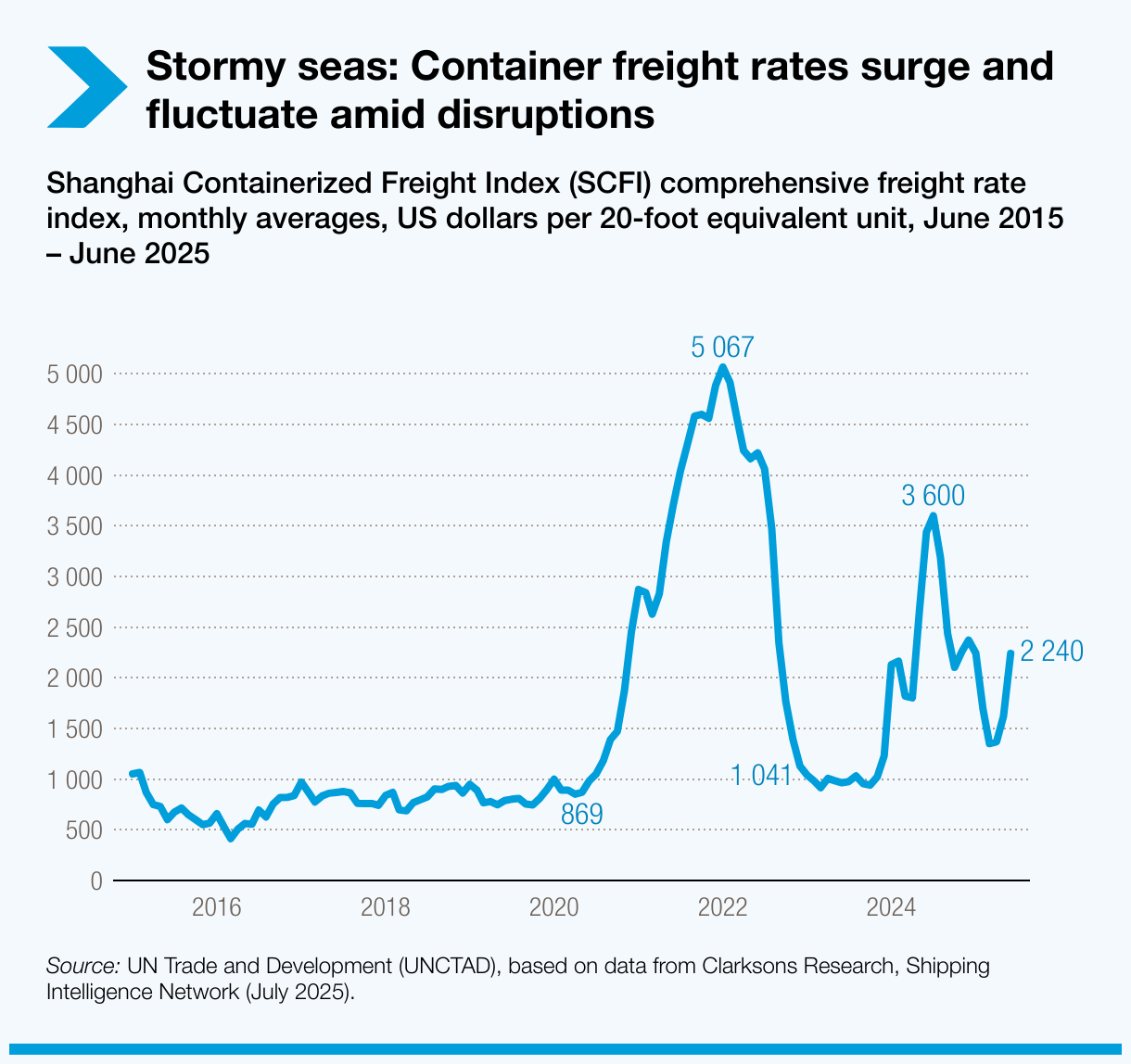
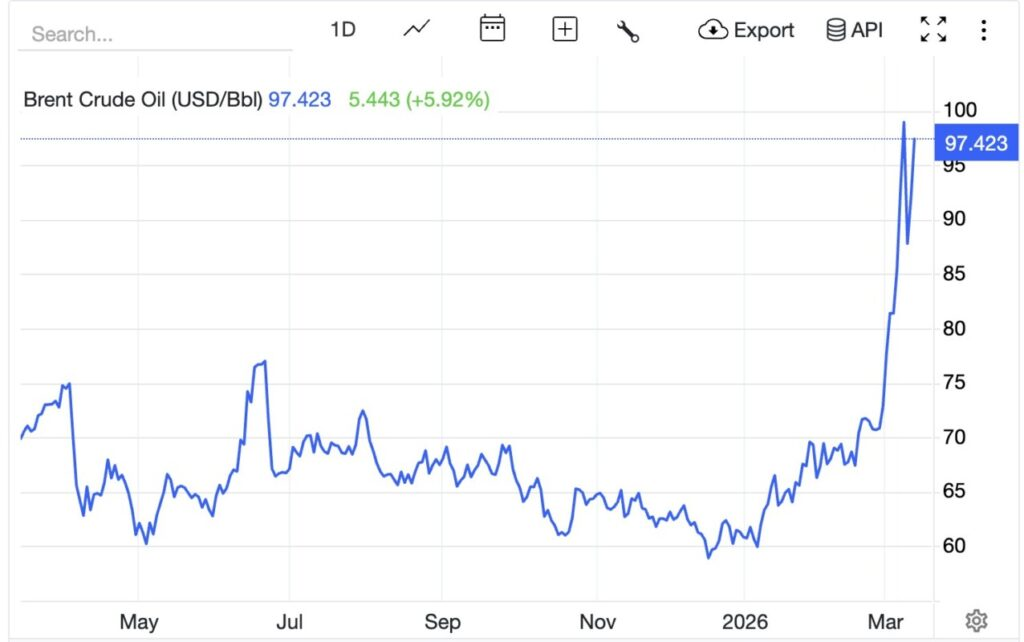
Geopolitical and freight instability: Suez, Panama, and the Strait of Hormuz can each reprice a shipment overnight. In March 2026, conflict around the Strait of Hormuz drove the sharpest single-month oil price move on record — Brent crude rose roughly 65% in a few weeks. Container rates swung just as hard: the Shanghai freight index rose 149% in 2024 during the worst of the Red Sea rerouting, fell back 37% by mid-2025 as capacity normalized, then jumped another 35% into early 2026 as Hormuz tensions hit. Breakbulk rates, driven by renewable energy and heavy-project cargo, are up 20% since 2025 on a separate track entirely.
Put together, these forces put origin and compliance data on the same footing as cost and price: an input that decides whether the shipment is profitable at all.
How the gap closes
Maintaining Freedom to Operate now requires managing compliance across three tiers simultaneously, not sequentially — the four tiers forward-thinking organizations are already building around:
- Entity-level controls — dynamic verification of supplier tax standing, regional compliance status, and real-time sanction checks.
- Product-level provenance — verifiable batch passports and Molecular Twins that prove feedstock origin, carbon footprint, and regulatory alignment down to the transaction, including across mass-balance blending points where physical and certified volumes diverge.
- Automated dynamic compliance — the legal, environmental, and financial documentation that clears customs and releases finance flows, executed without manual bottlenecks.
- Landed cost simulation — modeling tariffs, taxes, and freight across alternative routes and suppliers before a shipment moves, catching cost swings before they show up in the landed cost.
Any one of these layers alone is incomplete. Entity checks without product-level provenance leave gaps that a single bad batch can expose. Provenance without automated documentation just becomes another silo of unused data. The organizations pulling ahead are synchronizing all three on one ledger, which is what turns compliance from a defensive function into an operational one.
What this looks like in practice
ֿGlobal paper and pulp supply chains. EUDR requires continuous supply chain management, not a one-time document. An operator has to know and record where the wood came from at every handoff between the plantation and the EU market: the mill, the converter, and every point where the material changes hands. A manufacturer moving a tree-to-paper chain has to maintain that chain of custody the entire way through, not just confirm origin at the start. Without it, there's no way to produce deforestation-free proof when the shipment reaches the border, regardless of how the wood was actually grown.
Sustainable Aviation Fuel and bio-feedstocks. A cargo of hydrotreated vegetable oil (HVO) moving from South America to Europe lives or dies on RED II/III documentation. If origin verification fails, the cargo faces steep tariff penalties or outright rejection. Automated verification converts raw batch telemetry into a defensible trade passport — the difference between capturing and losing a 12–15% green premium.
Food and agribusiness. The same proof problem shows up further upstream, before the shipment even exists. Most certified soy runs through the same silos and crushers as conventional soy. Operators use mass balance: certified and conventional beans mix physically, but the certified volume is tracked administratively, so buyers only get sold as much certified soy meal as certified beans actually went in. Physical segregation, keeping certified material in its own chain end to end, is the alternative, but few commodities use it at that cost. Either model works — until the accounting behind the mass balance has a gap. Without transaction-level traceability, the certified premium is a number on a certificate. With it, the claim holds up when a buyer or regulator asks for proof.
In each case, the underlying asset is the same: verified, structured origin data available at the moment a decision needs to be made — not weeks later during an audit.
Looking into the future
Global trade isn't getting simpler. As the world's population grows and physical trade multiplies in volume and complexity, the layers of regulatory, tax, and freight volatility described above will only stack further. In nature, adaptability outlasts strength. Trade is heading the same direction.
Three technologies make that kind of adaptability possible at scale:
- Geospatial data — to verify where a shipment actually comes from and track its voyage
- Computer vision — to read and validate physical evidence at each hand-off
- Large language models — to process regulation , policies , taxes and certifications , turning a constantly shifting, fragmented body of rules into something a compliance team can act on in real time, not months later
Together, they're what let an organization absorb a market shock as it happens, instead of finding out a quarter later that the ground already moved.
Supply chain trace data, read in real time, protects gross margins and insulates landed costs. It turns regulatory volatility into a structural advantage over competitors still running on quarterly spreadsheets.
That's the shift this piece has been pointing at: proving origin in real time isn't a compliance function anymore. It's a margin function.

Our Latest Resources

In food processing, raw material integrity is the foundation of brand trust. SL Alimentos, a Brazilian processor of oats, grains, and agricultural ingredients, needed an integrated supply chain intelligence system to meet strict global sustainability standards across its supplier base.
Throughout history, civilizational breakthroughs have coincided with shifts in how humanity indexes space, maps energy, and moves physical resources. As Fernand Braudel observed in The Mediterranean and the Mediterranean World in the Age of Philip II, geography remains the unyielding backdrop against which all human enterprise must measure itself.