

The latest from Marvin
Continuous Assurance at Scale: How Ibema Is Keeping Its Export Markets Open
Tariffs are shifting. Chinese demand is unpredictable. And a new wave of trade evidence rules — EUDR, EU-Mercosur, and more coming — means market access increasingly depends on proving where your product came from, continuously.
Ibema, one of Latin America's largest paperboard manufacturers, is using this moment to rebuild its supply chain.
The scope of the Marvin implementation is what makes it notable: it covers Ibema's own operations plus the onboarding of its full supplier base. Along the way, it also improved inventory management, smoothed out the entire supplier relationship — with real financial value on payments and collections — and moved Ibema's broader digital transformation forward.
About Ibema: High-Velocity Scale Meets Global Trade
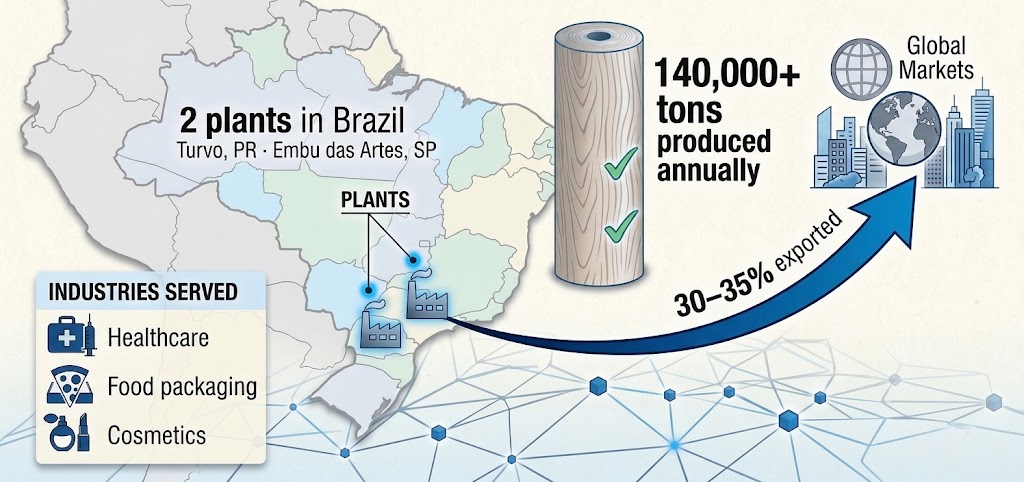
Founded in 1955, Ibema Companhia Brasileira de Papel produces over 140,000 tons of high-grade paperboard annually across its primary industrial facilities in Turvo (PR) and Embu das Artes (SP). It supplies healthcare, food packaging, and cosmetics companies through a network of raw fiber suppliers, logistics hubs, and international buyers.
At this scale, with demand shifting quickly and evidence requirements expanding, periodic audits aren't enough. Ibema needed infrastructure built for planning , verification and execution.
The Challenge: Keeping Markets Open in a Shifting World
Ibema's exposure wasn't tied to one regulation. It came from volatile demand and growing evidence requirements hitting a supply chain that still ran on manual, disconnected processes:
- Redirecting Volume as Markets Shift. Tariff regimes and demand patterns keep shifting across export markets. That's two problems at once: proving origin and compliance quickly enough to keep shipments moving, and knowing, before committing volume, which alternative destination actually makes sense once compliance, cost, and demand are weighed against each other.
- Proof of Origin, Shipment by Shipment. Every batch needs two different kinds of evidence tied together: geospatial verification that the plot is real and wasn't deforested after the cutoff date, and legal proof of the right to harvest it (land ownership documentation). A single export shipment can touch on more than 500 data points across dozens of supplier plots — assembled and cross-checked by hand.
- Data Collection Across Third Parties. Supplier records, certification bodies, logistics partners, customs systems — each holds a different piece of the evidence. Getting that data in securely, and back out to auditors and buyers, meant duplicate requests and manual reconciliation across systems, costing an estimated 20% of back-office hours per export cycle.
- Non-Compliance Risk. A single unverified fiber source can hold up an entire container at the port — or close off a market entirely. Under EUDR, penalties can reach up to 4% of annual turnover, on top of the shipments and contracts lost while access is suspended.
The Solution: Marvin’s Agentic AI & Traceability Infrastructure
Ibema deployed Marvin to unify land monitoring, inventory tracking, supplier management, and customer delivery into a single, automated intelligence engine.
- Supplier Hub — automated onboarding, entity verification, and ongoing risk profiling of upstream suppliers, replacing one-time vetting with continuous monitoring.
- Order management — every order automatically pulls together three things in one place: the compliance status of the goods, real-time inventory levels for operational planning, and the invoice — giving both Ibema and its suppliers faster access to cash through cleaner AR/AP cycles.
- Product assurance (regulation & certification) — standardized product catalogs that link finished paperboard to verified fiber origins and automatically generate the regulatory and certification evidence, including EUDR Due Diligence Statements.
- Dynamic inventory & category management — real-time visibility into raw material stocks and batch classifications, with every batch linked back to its verified source.
- Cross-border trade acceleration — export workflows that pre-screen shipments for compliance, cutting customs delays and giving Ibema room to redirect volume as trade conditions change.
Together, these connect Ibema's internal operations to its suppliers on one side and to customers and auditors on the other, so everyone works from the same verified picture.
The Strategic Impact
Continuous supply chain assurance: Manual, sample-based auditing is gone. 100% of exported products now carry a verified origin trail, generated continuously rather than pulled together at audit time.
Lower costs, open market opportunities: Faster export documentation and fewer customs delays cut landed logistics costs by an estimated 15%, and give Ibema the flexibility to pursue new markets as tariffs and demand shift.
A better experience for suppliers and customers: Suppliers get a simple digital onboarding process instead of paperwork, cutting onboarding time by up to 70%. International buyers get direct visibility into origin and compliance data, which strengthens Ibema's standing with the customers it sells to.
Tighter inventory and category operations: Procurement, inventory, and fulfillment stay aligned in real time, cutting stock mismatches by an estimated 30% and reducing manual rework.
Executive Perspective
"Achieving EUDR compliance at our scale required more than adding resources or relying on manual processes. We needed to evolve the way our supply chain operates. Through our partnership with Marvin, we were able to automate complex data verification and build a scalable approach to compliance. Beyond protecting our access to export markets, this transformation has also increased transparency and improved collaboration with suppliers and international partners across our value chain."
— Marcelo Machado Berwerth, International Sales Executive, Ibema
The Bigger Picture
Trade rules and demand patterns will keep shifting. Ibema's approach — continuous assurance built into the supply chain itself, rather than reconstructed at each audit — is what lets it keep its export markets open as conditions change.

Our Latest Resources

In food processing, raw material integrity is the foundation of brand trust. SL Alimentos, a Brazilian processor of oats, grains, and agricultural ingredients, needed an integrated supply chain intelligence system to meet strict global sustainability standards across its supplier base.
Throughout history, civilizational breakthroughs have coincided with shifts in how humanity indexes space, maps energy, and moves physical resources. As Fernand Braudel observed in The Mediterranean and the Mediterranean World in the Age of Philip II, geography remains the unyielding backdrop against which all human enterprise must measure itself.